Preventive care protects your teeth before pain starts. Today, new tools help your dentist find problems early, plan treatment with precision, and guide you to simple daily habits that work. In this blog, you will see how digital x‑rays, small cameras, and smart software change a routine visit into a clear health check. You will also learn how a Villa Park family dentist uses these tools to track changes in your mouth over time. This support helps you avoid urgent visits and costly procedures. Instead, you get steady care that fits your life and your family. Each step uses clear images and data so you can see what your dentist sees. That shared view builds trust. It also gives you control over your choices. Technology does not replace a caring touch. It strengthens it and keeps your smile strong.
Why technology matters for your family’s checkups
You want clear answers during a visit. You also want to protect your child’s teeth and your own. Modern tools give your dentist three strengths.
- Earlier warning signs
- Less radiation and less time in the chair
- Simple pictures that explain your choices
These strengths matter for every age. A small cavity in a child, gum disease in an adult, or wear in an older parent all start quietly. Technology helps your dentist see these changes when they are still small. That means easier care and less stress for your family.
Digital x‑rays that respect your safety
Traditional x‑rays used film. They took longer and used more radiation. Digital x‑rays use sensors and computers. This shift changes your visit in three ways.
- Lower radiation exposure
- Instant images on a screen
- Clear contrast that shows tiny spots of decay
The American Dental Association explains that digital systems often use less radiation than older film X-rays while still giving sharp images.
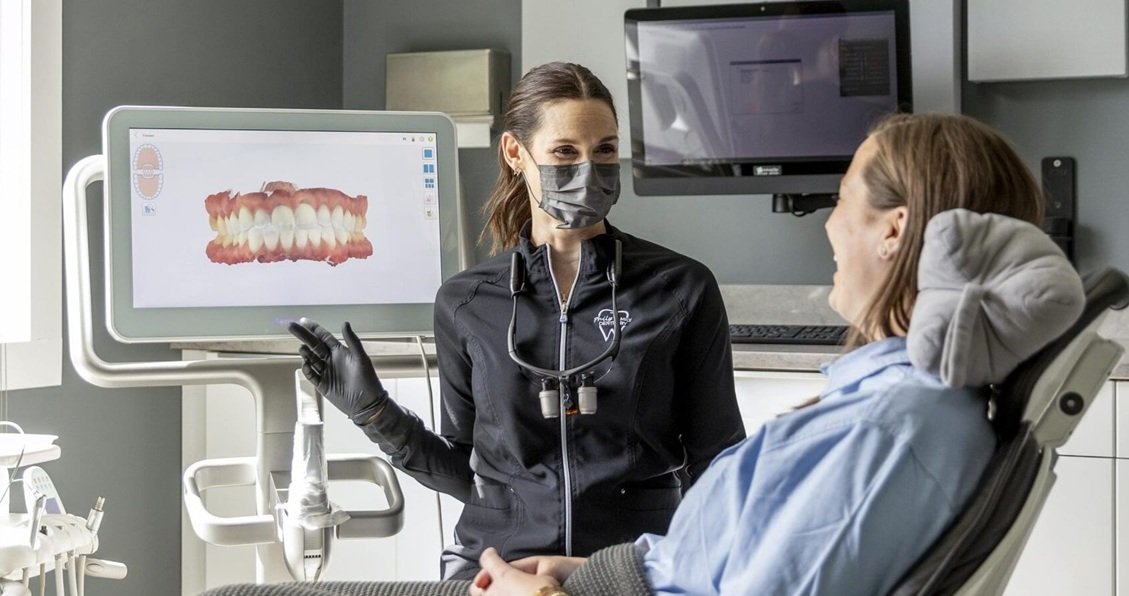
Your dentist can zoom in, adjust brightness, and compare images from past visits. You see your own teeth on a monitor. That picture turns a confusing talk into a plain story. You can point to a dark shadow and ask what it means. Your child can see where brushing missed the back teeth. You leave with a plan, not guesswork.
Intraoral cameras that show the full story
An intraoral camera is a small camera that fits in your mouth. It shows real-time pictures on a screen. This tool supports prevention in three key ways.
- Shows cracks, stains, and worn spots that a mirror may miss
- Records pictures at each visit for side-by-side comparison
- Helps you see the effect of your home care
When you see a close image of plaque along the gumline, daily flossing stops feeling like a task. It becomes a direct way to fix what you just saw. Children often respond well to this clear feedback. You can say, “See that sticky line. That is what we scrub off with your brush each night.” The picture turns into motivation.
Fluoride, sealants, and data-driven choices
Preventive care often includes fluoride and sealants. Technology helps plan these steps at the right time.
- Digital charts track when each tooth came in
- X‑rays and photos show deep grooves that trap food
- Risk tools flag children with higher cavity rates
The Centers for Disease Control and Prevention reports that dental sealants on permanent molars can reduce cavities in children by up to 80 percent in the first two years.
Your dentist uses this kind of research with your child’s own records. If your child has deep molars, a history of cavities, and no sealants yet, the choice becomes clear. A quick, painless sealant visit may prevent years of fillings.
Comparing common tools in family dentistry
| Tool | What it does | How it helps prevention | Who benefits most |
|---|---|---|---|
| Digital x‑rays | Shows teeth and bone under the gums | Finds decay, infections, and bone loss early | Children, adults, older adults |
| Intraoral camera | Shows live pictures inside the mouth | Reveals plaque, cracks, and worn fillings | Visual learners, nervous patients |
| Digital charts | Stores records and images | Tracks changes over time and patterns of disease | Families with ongoing care |
| Sealants | Protective coating on chewing surfaces | Blocks food and bacteria from deep grooves | Children and teens |
| Fluoride treatments | Strengthens tooth enamel | Makes teeth more resistant to decay | Children and high risk adults |
Smart software and tracking over time
Family practices use software that links your x‑rays, photos, and notes. This system builds a clear story about your mouth. It does three important things for you.
- Shows if a small shadow grows between visits
- Tracks gum measurements across the years
- Flags missed checkups for you or your child
With this record, your dentist can say, “This spot has not changed in three years. We can keep watching.” Or, “This pocket around the tooth is deeper than last year. We need to act now.” You gain a clear sense of risk and timing.
Technology for anxious patients and children
Fear stops many people from seeking care until pain hits. Technology can ease that fear.
- Shorter visits due to faster imaging
- Less need for repeat x‑rays
- Pictures that replace long explanations
Children respond to screens and images. When they see their own teeth on a monitor, they often feel curious instead of scared. You can sit with your child and ask questions together. This shared moment turns a visit into a team effort.
How you can use these tools at your next visit
You do not need to understand every device. You only need to ask three direct questions.
- “Can you show me what you see on the screen?”
- “Has this changed since my last visit?”
- “What can I do at home to improve this picture?”
When you ask these questions, you invite your dentist to use all the tools in the office in a way that serves you. The goal is simple. Catch disease early. Protect healthy teeth. Keep every member of your family out of dental pain.
Technology does not replace the bond you build with your dentist. It strengthens that bond with clear proof, shared images, and steady tracking. With the right tools and regular visits, you protect your smile and your child’s smile before trouble starts.